Designing with Precision: The Role of the Plastic Surgery Icon in Modern Medical Branding
In the highly specialized field of aesthetic medicine, visual communication carries as much weight as clinical expertise. Patients seeking cosmetic procedures are often navigating complex emotions and high expectations before they ever step foot in a consultation room. This is where the strategic use of a Plastic Surgery Icon becomes essential. Far from being mere decoration, these simple line elements serve as immediate visual anchors that convey professionalism, safety, and transformation. For web designers, marketing agencies, and medical practices, securing a high-quality symbol that is easy to edit and use is the first step in building a cohesive digital identity.
The Psychology of Simple Line Elements in Aesthetic Medicine
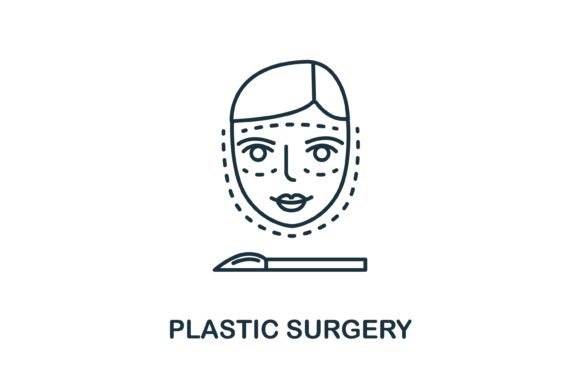
When browsing templates or designing infographics for plastic surgery, less is almost always more. The industry has moved away from graphic, anatomical illustrations that can appear clinical or intimidating. Instead, modern design favors the simple line element plastic surgery symbol. This minimalist approach serves a specific psychological purpose. Clean lines suggest precision, sterility, and modern technology—attributes that patients desperately seek in a surgeon.
A well-crafted vector graphic avoids the grotesque while hinting at the transformative nature of the work. Whether depicting a subtle facial profile, a stylized scalpel, or an abstract representation of symmetry, the icon must strike a delicate balance. It needs to be recognizable enough to categorize content instantly but elegant enough to maintain the luxury feel associated with high-end aesthetic services. When you integrate a refined Plastic Surgery Icon into a website header or patient brochure, you are signaling that the practice values aesthetics in its own right, reinforcing trust through design consistency.
Versatility Across Digital and Print Workflows
One of the primary reasons designers prioritize obtaining both EPS and JPG files is workflow versatility. In the fast-paced environment of medical marketing, assets need to perform across multiple touchpoints without degradation. A raster image might look acceptable on a social media post, but it will fail catastrophically when scaled up for a clinic banner or printed on high-gloss brochures. This is why the vector format is non-negotiable for professional results.
- Web Design Integration: SVG conversions from EPS files allow icons to remain crisp on retina displays and mobile screens, improving user experience and site speed.
- Infographic Clarity: Complex data regarding recovery times or procedure statistics requires icons that do not compete with text. Simple line symbols guide the eye without adding visual noise.
- Merchandise and Signage: Vector graphics ensure that logos and symbols can be embroidered on scrubs or etched onto glass partitions with perfect fidelity.
- Patient Education Materials: Consistent iconography helps break down dense medical information into digestible visual chunks, improving patient comprehension and retention.
Having an easy-to-edit source file means your team can adjust stroke weights, colors, or proportions to match seasonal campaigns or rebranding efforts without commissioning new artwork from scratch. This flexibility is crucial for maintaining brand agility in a competitive market.
Technical Considerations for Editable Vector Graphics
Not all plastic surgery symbols are created equal. When selecting a logo vector graphic for templates or custom projects, technical quality dictates long-term usability. A poorly constructed vector file can be just as problematic as a low-resolution JPEG. Designers should look for clean anchor points, organized layers, and proper grouping. An "easy to edit" file implies that paths are not overly complex and that elements are logically separated.
For instance, if you need to change a facial profile icon from a solid fill to an outline style for a different section of a website, a well-organized EPS file makes this a matter of seconds. Conversely, a messy file with merged shapes and excessive nodes can turn a simple color swap into a tedious reconstruction job. Furthermore, compatibility matters. While EPS is the industry standard for print and cross-platform editing, having a high-resolution JPG included provides immediate utility for quick mockups, internal presentations, or platforms that do not support vector formats. This dual-file delivery ensures that both the senior art director and the junior social media manager have exactly what they need.
Enhancing User Experience Through Visual Navigation
Beyond branding, the Plastic Surgery Icon plays a functional role in user interface design. Prospective patients often arrive at a clinic’s website feeling overwhelmed by options. They may not know the difference between a blepharoplasty and a brow lift, but they understand visual cues. Intuitive iconography acts as a universal language, reducing cognitive load and helping users navigate to relevant information faster.
Consider a services page cluttered with text. Now imagine that same page where each procedure category is anchored by a distinct, consistent line symbol. The visual rhythm created by these icons breaks up the text, making the content scannable. This is particularly important for mobile users, who constitute a significant portion of medical web traffic. A simple line element plastic surgery symbol occupies minimal screen real estate while delivering maximum semantic value. By prioritizing these visual signposts, practices can decrease bounce rates and increase time-on-page, both of which are positive signals for search engine optimization.
Selecting the Right Symbol for Your Specific Niche
Plastic surgery is not a monolith; it encompasses reconstructive work, facial aesthetics, body contouring, and non-surgical treatments. The icon you choose should reflect the specific focus of the practice or the specific section of the infographic. A generic medical cross does not communicate the nuance of rhinoplasty, just as a liposuction cannula icon is inappropriate for a medspa offering Botox.
- Facial Aesthetics: Look for balanced profiles, geometric overlays suggesting symmetry, or soft curves that imply rejuvenation rather than alteration.
- Body Contouring: Abstract silhouettes that emphasize proportion and flow work best. Avoid hyper-realistic anatomy which can trigger negative body image associations.
- Reconstructive Surgery: Symbols here should lean towards healing, restoration, and structural integrity. Interlocking shapes or supportive lines often convey this message effectively.
- Non-Surgical Treatments: These often benefit from lighter, more delicate line work or sparkles/stars integrated into the design to suggest enhancement without invasion.
When evaluating a Plastic Surgery Icon pack or individual asset, consider the emotional tone of the line weight itself. Thicker lines can feel bold and corrective, suitable for major surgical procedures. Thinner, more delicate lines often read as refined and gentle, aligning better with injectables or skincare. Matching the visual weight of the icon to the invasiveness of the procedure creates a subconscious harmony that enhances the overall messaging strategy.
Integration with Broader Design Systems
A standalone icon is useful, but an icon that belongs to a cohesive family is powerful. When downloading or purchasing plastic surgery symbols for templates, verify that they share a consistent visual DNA. Do they all have the same corner radius? Is the stroke width uniform? Does the negative space balance match across the set? Inconsistencies in these subtle details can make a professional website look cobbled together.
Modern web design relies heavily on design systems where components are reusable and predictable. Your plastic surgery symbol should slot seamlessly into this architecture. Because you receive editable EPS files, you can normalize disparate icons to fit your system. Perhaps you found the perfect nose icon but the accompanying breast augmentation symbol feels too heavy. With vector access, you can adjust the stroke and scale to create uniformity. This level of customization is what separates premium medical branding from generic template usage.
Ultimately, the goal is to create a visual environment where the patient feels understood and cared for before any verbal communication occurs. The right iconography bridges the gap between clinical reality and patient aspiration. By investing in high-quality, editable vector assets that include both EPS and JPG formats, designers and practitioners equip themselves with the tools necessary to build trust, enhance usability, and communicate the delicate art of plastic surgery with clarity and grace. Whether used in a comprehensive infographic explaining post-op care or as a subtle navigation aid on a luxury landing page, these simple line elements are foundational to effective medical marketing.