Evaluating the Procedural Mask Icon for Professional Design Projects
In the evolving landscape of digital communication, visual symbols carry significant weight. The procedural mask icon has transitioned from a niche medical illustration to a ubiquitous element in web design, infographics, and corporate safety templates. For designers, marketers, and content creators, selecting the right asset is not merely about aesthetics; it is about clarity, scalability, and technical reliability. This specific vector graphic resource offers a streamlined solution for professionals who require accurate, editable, and versatile representations of personal protective equipment (PPE). Understanding the practical value of this asset involves looking beyond the preview image to evaluate file integrity, editing potential, and long-term usability across various media formats.
Defining the Asset and Its Visual Utility
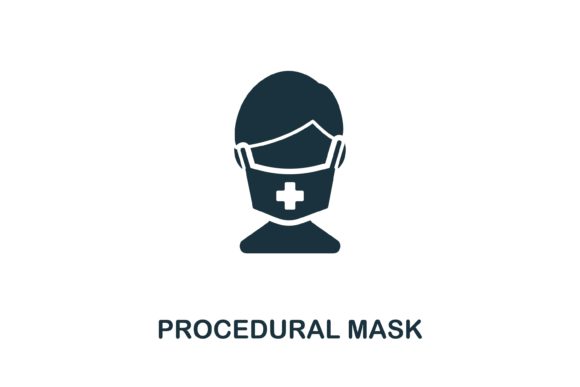
The procedural mask icon serves as a functional symbol within the broader category of health and safety graphics. Unlike photorealistic images that can appear cluttered at small sizes or clash with minimalist branding, this vector-based illustration prioritizes clean lines and immediate recognition. It typically depicts the standard rectangular surgical mask with visible pleats and ear loops, rendered in a style that balances detail with simplicity. This balance is critical for user interface (UI) design where icons must remain legible at 16x16 pixels while retaining enough character to look professional on high-resolution print materials.
For web designers and template creators, the primary utility lies in its semantic clarity. When used in navigation menus, warning banners, or instructional guides, the icon communicates safety protocols without requiring supplementary text. In an era where accessibility and quick information processing are paramount, having a dedicated, well-crafted procedural mask icon reduces cognitive load for users. It functions effectively as both a standalone logo element for healthcare startups and as part of a comprehensive icon set for educational publishers or government agencies.
Technical Specifications and File Flexibility
The true measure of any design asset is its performance in a production environment. This resource package includes both EPS and JPG files, addressing distinct workflow needs. The inclusion of an EPS (Encapsulated PostScript) file is the most significant factor for professional use. As a vector format, EPS allows for infinite scaling without pixelation, making it suitable for everything from business cards to large-format signage. More importantly, it preserves path data, enabling designers to modify anchor points, adjust stroke weights, and recolor elements to match specific brand guidelines. This editability transforms a generic stock icon into a bespoke visual component.
The accompanying JPG file serves a different, yet equally important purpose. While raster formats lack scalability, they offer universal compatibility. Content managers, bloggers, and social media coordinators often need a plug-and-play solution that does not require Adobe Illustrator or specialized vector software. A high-quality JPG ensures that non-designers can implement the procedural mask icon in presentations, email newsletters, or CMS platforms instantly. However, professionals should note that the JPG is best reserved for fixed-size applications, while the EPS remains the master file for any layout requiring precision or resizing.
- Vector Integrity: Ensures crisp edges on Retina displays and print outputs.
- Color Customization: Allows seamless integration with existing brand palettes via CMYK or RGB adjustments.
- Layer Organization: Facilitates easy isolation of mask elements from background artifacts.
- Cross-Platform Compatibility: Works reliably across macOS, Windows, and various design suites.
Practical Applications Across Industries
The versatility of the procedural mask icon extends far beyond healthcare websites. Its neutral, informative aesthetic makes it applicable in diverse sectors where safety, hygiene, or compliance is relevant. Educators and e-learning developers frequently utilize such icons to illustrate classroom safety rules or biology curriculum content. In these contexts, the icon must be friendly yet authoritative, avoiding overly clinical or alarming connotations. A well-designed vector strikes this tone effectively, supporting learning objectives without distracting from the core message.
Corporate communications also benefit significantly. Human resources departments creating return-to-work policies, facility management teams designing signage, and event organizers publishing health guidelines all require consistent visual language. Using a standardized procedural mask icon across internal memos, external websites, and physical posters creates a cohesive identity that reinforces organizational competence. For freelancers and agencies managing multiple clients, maintaining a library of reliable, editable assets like this reduces turnaround time and ensures deliverables meet professional standards regardless of the industry vertical.
Evaluating Quality and Design Consistency
When integrating this asset into larger projects, consistency is key. A common pitfall with stock icons is mismatched line weights or varying levels of detail when combined with other symbols. This procedural mask icon is designed with modularity in mind, featuring balanced proportions that align well with standard grid systems used in modern UI kits. Designers should verify that the stroke width corresponds to their existing icon family before deployment. Because the EPS file is fully editable, minor adjustments to align with a specific design system are straightforward, but starting with a geometrically sound base saves considerable refinement time.
Quality also manifests in how the icon handles negative space. Effective procedural mask illustrations define the pleats and contours through intelligent use of whitespace rather than excessive shading or gradients. This flat or semi-flat approach not only adheres to contemporary design trends but also ensures the graphic reproduces accurately in single-color applications, such as embroidery, laser etching, or monochrome printing. Assets that rely on complex effects often fail in these production scenarios, whereas this simplified vector maintains its integrity across all output methods.
Considerations for Implementation and Licensing
While the technical and aesthetic attributes are strong, practical implementation requires awareness of context and licensing. Users must ensure that the specific license agreement covers their intended use case, particularly for commercial templates or merchandise. Beyond legalities, there is a contextual consideration: the procedural mask icon carries cultural and emotional associations. Designers should employ it thoughtfully, ensuring it supports rather than dominates the narrative. In some layouts, pairing it with complementary symbols like hand sanitizer, ventilation, or distance markers creates a more holistic safety message than using the mask icon in isolation.
From a workflow perspective, organizing this asset correctly upon acquisition prevents future friction. Renaming files descriptively, tagging them in digital asset management systems, and documenting any modifications made to the original EPS are best practices that pay dividends during future projects. For teams collaborating across departments, establishing usage guidelines—such as minimum clear space, approved color variations, and prohibited alterations—ensures the procedural mask icon retains its effectiveness and professionalism over time.
Assessing Long-Term Value and Relevance
Critics might question the longevity of PPE-related graphics as global health priorities shift. However, the procedural mask icon has established itself as a permanent fixture in visual vocabularies related to public health, laboratory safety, food service, and industrial hygiene. Investing in a high-quality, editable version now provides lasting utility independent of temporary trends. Unlike trendy illustrative styles that date quickly, a clean, functional vector representation remains relevant as long as the underlying safety practice exists.
Furthermore, the skills and workflows reinforced by using proper vector assets transfer to other design tasks. Evaluating this procedural mask icon encourages a disciplined approach to asset selection: prioritizing editability over convenience, understanding format distinctions, and considering cross-media application. These habits distinguish professional creators from casual users. Whether you are building a comprehensive safety template, updating a healthcare portal, or simply need a reliable symbol for a one-off project, this asset delivers tangible value through its combination of technical robustness and visual clarity.
Ultimately, the decision to incorporate this procedural mask icon should be driven by project requirements and quality standards. It excels in scenarios demanding scalability, customization, and professional presentation. While no single asset solves every design challenge, this resource provides a solid foundation for communicating safety and protection effectively. By leveraging both the EPS and JPG formats appropriately and respecting design principles, professionals can integrate this symbol seamlessly into their work, enhancing both functionality and aesthetic coherence. The result is communication that is not only visually appealing but also practically useful and technically sound.