Modeling Icon: A Versatile Visual Tool for Modern Workflows
In today’s fast-paced digital environment, clarity and efficiency are key. Whether you're designing a website, creating an infographic, or developing a presentation, the right visual elements can make all the difference. The Modeling Icon serves as a simple yet powerful tool for representing complex processes in a clean, recognizable format. As a line element symbol, it offers flexibility across platforms and use cases, from web design to business planning. Understanding how to effectively integrate this icon into your workflow can enhance communication, streamline planning, and improve overall project execution.
What Is a Modeling Icon?
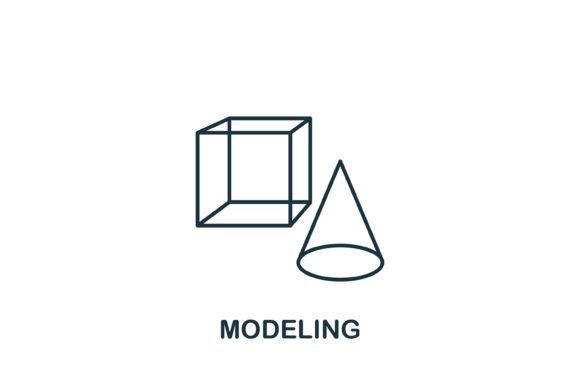
The Modeling Icon is a minimalist graphic representation often used to signify the process of modeling—whether in a business, technical, educational, or creative context. Typically offered as a vector graphic in formats like EPS and JPG, it can be easily scaled and edited to fit various design needs. Its simplicity makes it ideal for templates, dashboards, infographics, and user interface elements where visual clarity is essential.
At its core, the Modeling Icon functions as a symbolic placeholder. It can represent anything from data modeling and system architecture to strategic planning and creative ideation. This broad applicability allows it to be used across industries and disciplines, making it a valuable asset for professionals who need to convey process-driven concepts quickly and clearly.
When to Use the Modeling Icon
The versatility of the Modeling Icon means it can play a role at multiple stages of a project or task. Here are a few practical scenarios where incorporating this icon adds value:
- Planning Phase: Use the icon to represent modeling activities in project roadmaps, Gantt charts, or flow diagrams. It helps stakeholders visualize where modeling fits in the broader workflow.
- Execution Phase: In design tools or documentation platforms, the icon can label modeling tools, data structures, or simulation modules, making interfaces more intuitive for users.
- Review or Presentation: When summarizing a process or outcome, the Modeling Icon can be used in slides or reports to highlight how modeling contributed to the final result.
Its utility extends beyond digital design. Educators can use it in lesson plans to indicate modeling exercises, while entrepreneurs might include it in pitch decks to illustrate strategic modeling of market behavior or business systems.
How the Modeling Icon Integrates with Other Tools and Processes
One of the strengths of the Modeling Icon is its compatibility with a wide range of tools and platforms. Whether you're using Figma, Adobe Illustrator, PowerPoint, or Notion, the icon can be inserted and customized to match your visual style. Because it’s often provided in vector format (EPS), it scales without loss of quality, making it suitable for both high-resolution print and digital displays.
When combined with other icons or UI elements, the Modeling Icon helps create a cohesive visual language. For example, in a dashboard that tracks business performance, it can be grouped with icons representing analysis, forecasting, or reporting to show how these functions interrelate. In educational content, it can be paired with icons for research, collaboration, or feedback to illustrate a learning cycle.
Additionally, the Modeling Icon supports integration with agile methodologies, lean planning, and systems thinking frameworks. When used in Kanban boards or process maps, it becomes a visual cue for steps involving modeling, whether that’s building a prototype, simulating outcomes, or refining a concept.
Practical Tips for Using the Modeling Icon Effectively
To get the most out of the Modeling Icon in your projects, consider the following best practices:
- Match the Style: Ensure the Modeling Icon aligns with the visual style of your other graphics. If your design uses flat icons, opt for a version of the Modeling Icon that follows the same aesthetic.
- Use Consistent Sizing: Maintain visual harmony by using the same icon size across your layout. This is especially important in infographics and dashboards where consistency supports readability.
- Label Clearly: While the icon itself is intuitive, pairing it with a short label or tooltip ensures there’s no ambiguity about its meaning, especially in cross-functional or international teams.
- Customize Thoughtfully: Since EPS files are editable, you can tweak the icon’s color or stroke width to match brand guidelines or design themes. Just be careful not to over-modify it to the point where it loses its recognizability.
- Organize for Reuse: Keep a library of icons, including the Modeling Icon, organized by category and format. This makes it easier to find and apply them consistently across projects.
By embedding the Modeling Icon into your design system or template library, you ensure that it becomes a standard visual element your team can rely on for clarity and consistency.
Real-World Applications of the Modeling Icon
Let’s look at a few examples of how different professionals might use the Modeling Icon in their daily work:
- Web Designers: Incorporate the icon into UI kits to label modeling tools or simulation features in web applications.
- Data Analysts: Use it in reports and dashboards to indicate areas where predictive modeling or statistical analysis has been applied.
- Project Managers: Feature it in planning documents to denote modeling phases in a system development lifecycle or business process redesign.
- Educators: Include the icon in course materials to visually distinguish modeling activities from other types of exercises or assessments.
- Entrepreneurs: Add it to business plans or pitch decks to show how market or product models were used to inform decisions.
Each of these applications reinforces the Modeling Icon’s role as a bridge between abstract concepts and visual communication. It transforms complex processes into digestible visual elements that support understanding and decision-making.
Preparing for Long-Term Use and Scalability
As your projects grow and evolve, so too should your visual assets. The Modeling Icon, when used strategically, can scale with your needs. Here are a few considerations for long-term implementation:
- Version Control: Maintain a master file of your icon library, including any customizations made to the Modeling Icon, so updates can be applied consistently.
- Accessibility: Ensure the icon remains accessible by using alt text in digital contexts and providing clear labels in printed materials.
- Brand Alignment: Periodically review how the Modeling Icon fits within your brand’s visual identity and update it as needed to maintain alignment.
- Team Training: Introduce the icon to new team members as part of onboarding, especially if it’s used in recurring workflows or templates.
By treating the Modeling Icon as part of your organization’s visual vocabulary, you help ensure that it remains a useful, recognizable tool over time.
Conclusion
The Modeling Icon is more than just a graphic—it’s a practical visual aid that supports clarity, communication, and consistency in a wide range of professional and creative workflows. Whether you're designing a digital interface, documenting a process, or presenting a strategy, this icon offers a clean, scalable way to represent modeling activities. With the right approach to integration, customization, and long-term management, it becomes a reliable asset that enhances both your efficiency and the user experience.