Oil Tank Icon: A Practical Vector Asset for Energy and Industrial Design
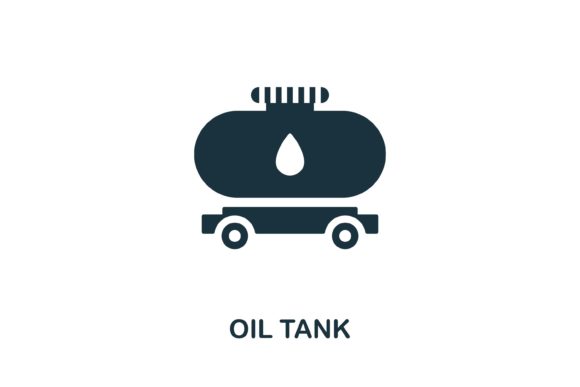
When designing for the energy sector, logistics, or environmental reporting, visual clarity is non-negotiable. The Oil Tank Icon serves as a fundamental building block in this visual language. It is more than just a simple graphic; it is a functional communication tool that instantly conveys storage, capacity, and industrial infrastructure without requiring explanatory text. As part of a broader oil industry collection, this monochrome symbol provides the versatility needed for everything from corporate annual reports to mobile application interfaces.
At its core, this asset is a vector-based representation of industrial storage. Because it is delivered in both EPS and JPG formats, it bridges the gap between professional print production and quick digital implementation. The monochrome aesthetic is intentional. In professional design, color often carries specific semantic weight—red for danger, green for safety, blue for water. By keeping the Oil Tank Icon neutral, designers retain full control over the narrative, allowing the icon to adapt to brand guidelines or warning systems without clashing with existing palettes.
Real-World Applications Across Industries
The true value of an Oil Tank Icon emerges when applied to specific workflows. Different professionals utilize this symbol to solve distinct communication challenges. Understanding these scenarios helps clarify why having a high-quality, editable vector file is superior to using generic clip art.
Corporate Reporting and Investor Relations
For marketers and communications teams in the energy sector, annual reports and ESG (Environmental, Social, and Governance) disclosures require precise data visualization. When illustrating reserve levels, storage capacity expansion, or supply chain logistics, a realistic yet stylized tank icon anchors the data. A monochrome vector allows the design team to integrate the icon seamlessly into infographics where color is reserved for highlighting growth trends or risk factors. The clean lines of a professional vector ensure the icon looks crisp whether printed on glossy paper or viewed on a tablet during a shareholder presentation.
Safety Signage and Operational Training
In industrial settings, clarity saves lives. Safety officers and facility managers use icons to create signage that transcends language barriers. An Oil Tank Icon is essential for labeling hazardous material storage areas, indicating fill points, or marking emergency shut-off zones. Because this asset is fully editable, safety teams can modify the icon to include specific hazard symbols, directional arrows, or regulatory compliance markers directly within the EPS file. The ability to scale the vector without pixelation means the same source file can be used for a small equipment sticker or a massive warehouse banner.
Educational Content and Technical Documentation
Educators, textbook publishers, and technical writers rely on consistent iconography to explain complex systems. When teaching petroleum engineering concepts or creating maintenance manuals, the Oil Tank Icon acts as a visual anchor. Students and technicians need to recognize components quickly. A standardized, monochrome icon reduces cognitive load, allowing the reader to focus on the process flow rather than deciphering inconsistent artwork. For digital learning platforms, the lightweight nature of vector graphics ensures fast loading times while maintaining sharpness on high-resolution screens.
Web Design and Digital Interfaces
Freelancers and web designers working on B2B industrial sites often struggle to find icons that match modern UI aesthetics. Many stock assets are too detailed or skeuomorphic for flat design interfaces. This Oil Tank Icon is crafted for digital legibility. Its simplified geometry works perfectly in navigation menus, feature grids, and dashboard widgets. Since it is available as a vector, developers can easily convert it to SVG code for responsive websites, ensuring it remains sharp on any device size. The monochrome base also makes it simple to apply CSS filters for hover states or active indicators.
Understanding the File Formats and Editability
Choosing the right format is just as important as choosing the right image. This package includes both EPS and JPG files, each serving a distinct purpose in your workflow.
- EPS (Encapsulated PostScript): This is your master file. It is infinitely scalable and fully editable in Adobe Illustrator, CorelDRAW, or Affinity Designer. Use this when you need to change line weights, combine the tank with other elements, or export to different formats like SVG or PDF. This is the file you archive for future projects.
- JPG (Joint Photographic Experts Group): This is your convenience file. It is a rasterized version ready for immediate use in Word documents, PowerPoint presentations, or basic image editors. While not scalable without quality loss, it eliminates the need for specialized software when you simply need to drop an icon into a draft or email.
The "easy to edit" claim is significant for efficiency. If your project requires the tank to appear partially filled to represent inventory levels, a vector EPS allows you to adjust the internal geometry in seconds. With a raster image, you would have to repaint pixels or use masking tools, which is time-consuming and often yields inferior results. Owning the vector source transforms the icon from a static picture into a dynamic design element.
Strategic Considerations Before Implementation
Before integrating an Oil Tank Icon into your project, consider the context of your audience and the message you intend to convey. Visual symbols carry associations that vary by region and industry segment.
Regulatory Compliance vs. Illustrative Use: Determine if you are creating legally mandated safety signage or general illustrative content. Regulatory signs often have strict standards regarding shape, proportion, and negative space. While this icon is excellent for illustrative purposes, marketing materials, and internal documentation, always verify against local OSHA, ISO, or ANSI standards if the graphic will serve as official safety wayfinding. Using a stylized icon where a regulated symbol is required can create liability issues.
Visual Hierarchy and Weight: In a set of icons, consistency is key. If you pair this Oil Tank Icon with thinner, more delicate line icons, it may look visually heavy. Conversely, placing it next to bold, solid-fill icons might make it appear faint. Test the icon at your intended display size alongside other elements in your kit. Because it is a vector, you can adjust the stroke width to achieve optical balance within your specific layout.
Cultural and Environmental Sensitivity: The oil and gas industry operates under increasing scrutiny regarding environmental impact. Consider how the icon is framed. In a sustainability report, pairing the tank icon with recycling symbols or leaf motifs can signal responsible management. In a purely technical manual, a neutral presentation is appropriate. Be mindful that for some audiences, industrial imagery triggers strong emotional responses; ensure the tone of the accompanying copy and overall design aligns with your communication goals.
Maximizing Value in Creative Projects
To get the most out of this asset, think beyond single-use applications. A high-quality monochrome Oil Tank Icon is a reusable component of your design system. Create variations while the file is open in your vector editor: add a gauge overlay for monitoring dashboards, create a cutaway version for educational diagrams, or develop a simplified silhouette for favicon or app icon use.
For entrepreneurs and small business owners in the industrial supply chain, consistent branding builds trust. Using the same high-quality icon across your website, invoices, vehicle decals, and trade show banners creates a cohesive professional identity. Avoid mixing this vector asset with low-resolution screenshots or mismatched clip art, as visual inconsistency can subtly undermine perceived competence.
Ultimately, the Oil Tank Icon is a utility. It solves the problem of representing complex industrial infrastructure in a compact, universally understood format. Whether you are a freelancer rushing to meet a client deadline, an educator preparing next semester’s curriculum, or a corporate designer updating global safety standards, having a reliable, editable vector asset streamlines production and elevates the final output. The combination of EPS flexibility and JPG convenience ensures that this resource remains relevant across every stage of your creative and professional workflow.